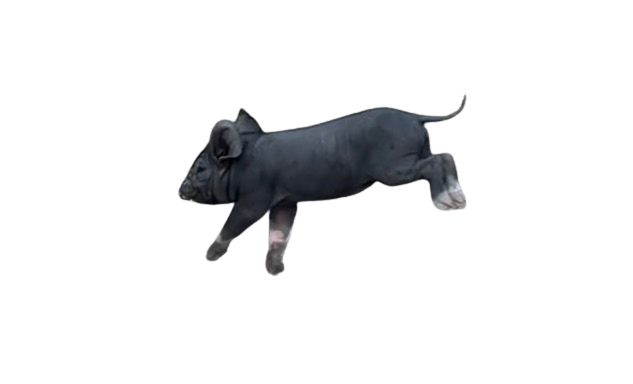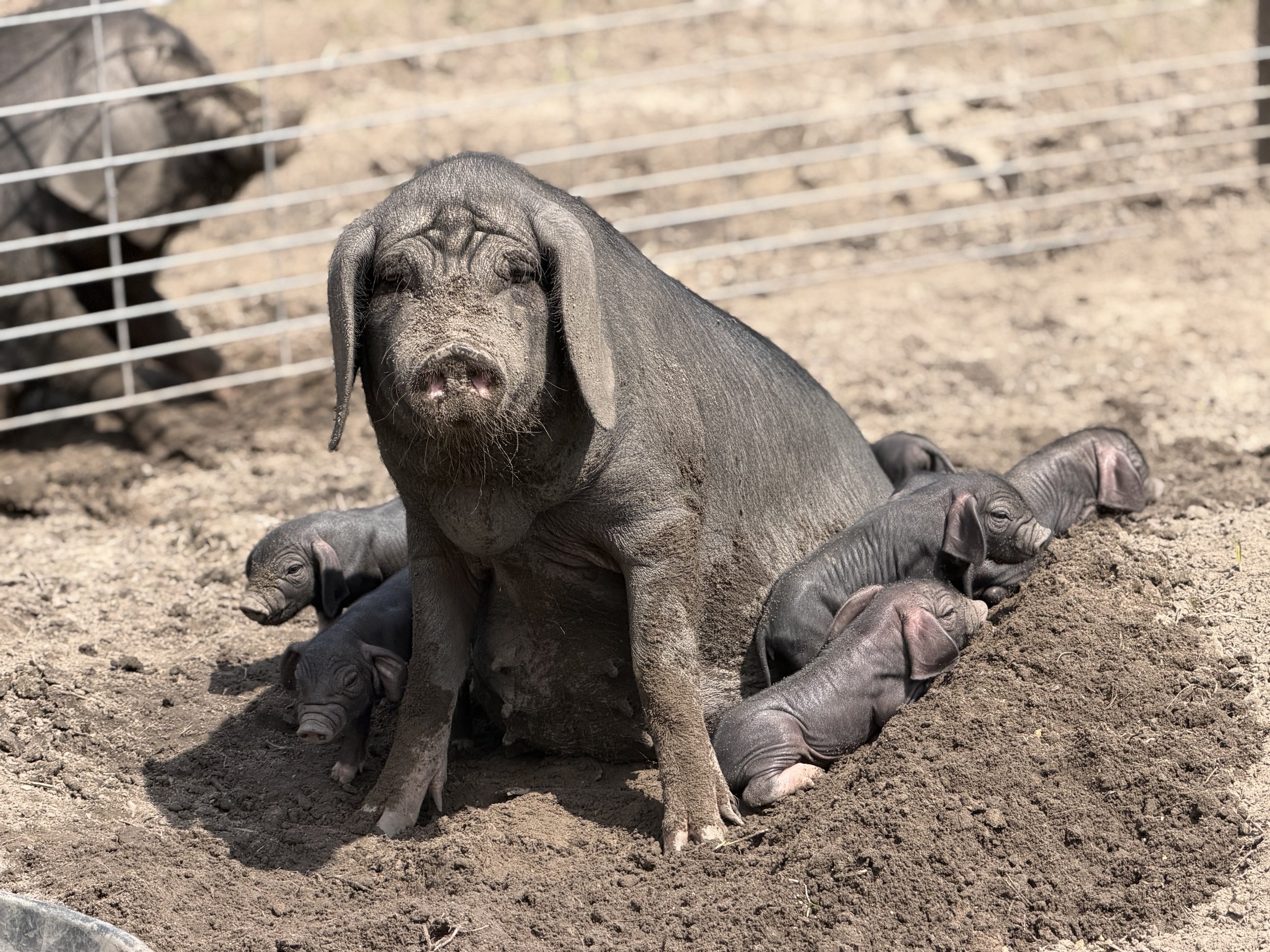
The Meishan is one of the oldest, if not the oldest, domesticated pig breed in the world.
Meishans are some of the rarest pigs in North America. They are also one of the most genetically significant pigs in the world. Meishans were first imported into the U.S. in 1989, after a decade of negotiations with China, as part of a joint study between the USDA, Iowa State and the University of Illinois. Only 99 Meishan pigs were imported and they were equally divided between the three participating research facilities. This marked the final and largest exportation of Meishans allowed by China in modern times. The other exportation’s were to France and England.
Meishans originated in the Taihu region of China, where pigs have been domesticated for over 5,000 years. In recent years, the critically low population levels of the Meishan Pig put the breed dangerously close to extinction. In 2018 The Livestock Conservancy estimated that less than 2,000 verifiably pure Meishans were left in the world. This led to the classification of the Meishan Breed as "Critically Endangered". The American Meishan Breeders Association(AMBA) leads the conservation effort, and is the source of many facts regarding the Meishan pig.
Successful conservation requires farms dedicated to the preservation of the breed. In 2025, our farm was established and also joined the AMBA. We had our first farrowing in March 2026.
About the meishan pig
MEISHAN TRAITS
docility
Meishan pigs have been bred to be extremely quiet, docile, and sedentary. This allows us to work with them closely and comfortably and spend time inside the pens with the piglets from the time they are born. Being able to work around and easily manage them with little stress is very important to us and makes the pigs happier.
Prolificity
Meishans are considered the most prolific breed of pig in the world. They reach puberty at 3 months of age and have high litter survival rates. On average, a sow will farrow a litter of 13-16.
Diet
Meishans have larger stomachs and a more lax digestive system than other breeds of swine, which allows them to consume more fiber in their diet than other pigs. Higher levels of fiber impedes the ability to absorb protein and amino acids, but the trade-off is the ability to digest carbohydrates more efficiently than other breeds. This digestive difference makes them considerably slower-growing than many heritage breed pigs, but perfectly suited for pasture.
disease & parasite resistance
A heritage breed, Meishans have not been given modern pharmaceuticals., This allows them an inherent disease and parasite resistance that breeds suited for a commercial setting would not have. The Meishan has been bred for over 5000 years to thrive without pharmaceutical intervention.
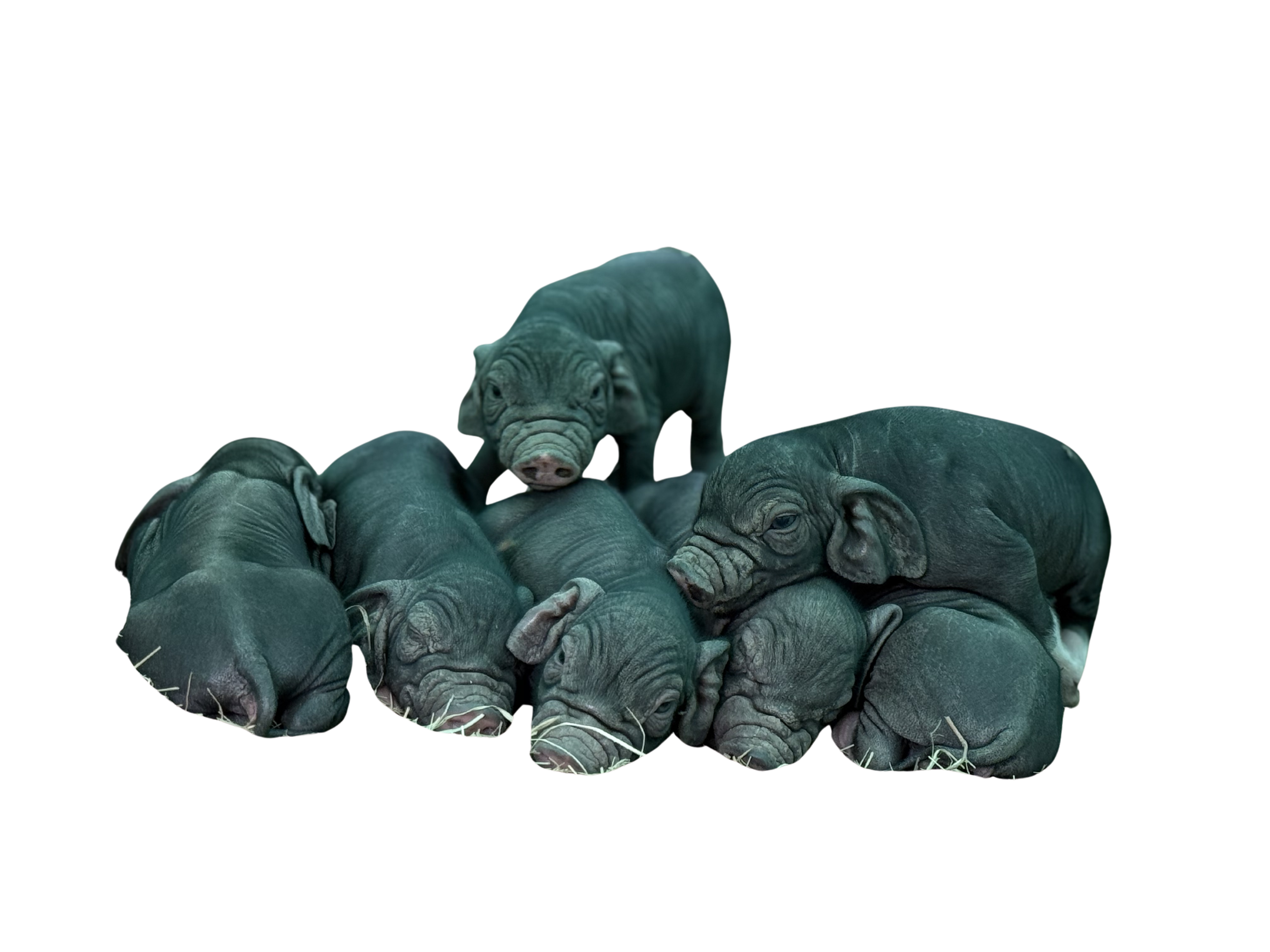
Our pigs live their lives on a rotated pasture with a variety of fodder. They graze on rye grass, bahia grass, sunflower sprouts, and oats. Additionally, we feed a non-GMO custom feed blend that we mix fresh every morning. They are given space to live their lives as pigs should - wallowing, exploring, snouting around.
MEISHAN MEAT
Meishans produce an intensely micro-marbled red meat pork due to inter-muscular and intra-muscular fat..
Meishan lard is significantly lighter, finer and renders at lower temperatures than other breeds. The result is incredibly tender meat. In China, Meishans have been prized for centuries.
Meishan pigs are prized in China and Japan for their succulent marbled meat and superior lard and fat quality.
The fat renders at a lower temperature than the meat, making it melt in your mouth. Banyou is the highest-grade oil on the hog, derived from caul fat, which surrounds the internal organs. Banyou is prized in baking and cooking alike for its finer grain and lighter-on-the-pallet taste.
Due to their natural diet, the meat and fat are incredibly nourishing and healthy. Pork fat is #8 on the BBC’s list of the world’s top 100 most nutritious foods.
Today, farmers, foodies, and chefs alike are discovering the incredible flavor of the Meishan pig.
Lasting impact
Many “rare” breeds have exceedingly limited genetic diversity. Because they were held in different facilities there are now distinct genetic lines without a common ancestor for 30 years. In the research facilities, they were insured not to be inbred but were otherwise bred without structure. This randomized their genetics in a way that is opportunistic. While being incredibly rare and maintaining certain breed standards, Meishans have a broad range of genetic variation.
Being part of the AMBA and having a breeding program of registered pigs, gives us access to the AMBA database. This allows us to track bloodlines to avoid inbreeding, particularly important for preserving this rare genetic resource.
Registering heritage breeds is critical. Registration ensures accurate population tracking for conservation efforts, secures breed purity and establishes a continuance of breed standards, and maintains genetic diversity.
You can find out more about the AMBA here.